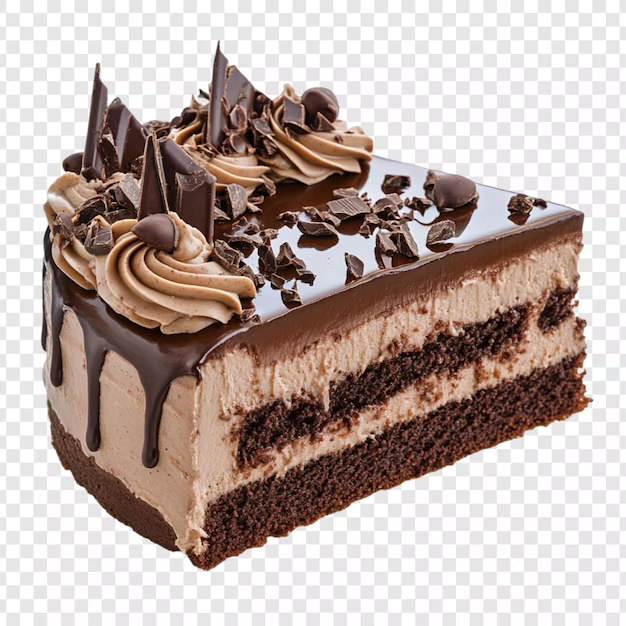
Fundamental Techniques of French Baking & Pastry
A methodical analysis of core disciplines: dough rheology, fermentation biochemistry, emulsion physics, and heat transfer.
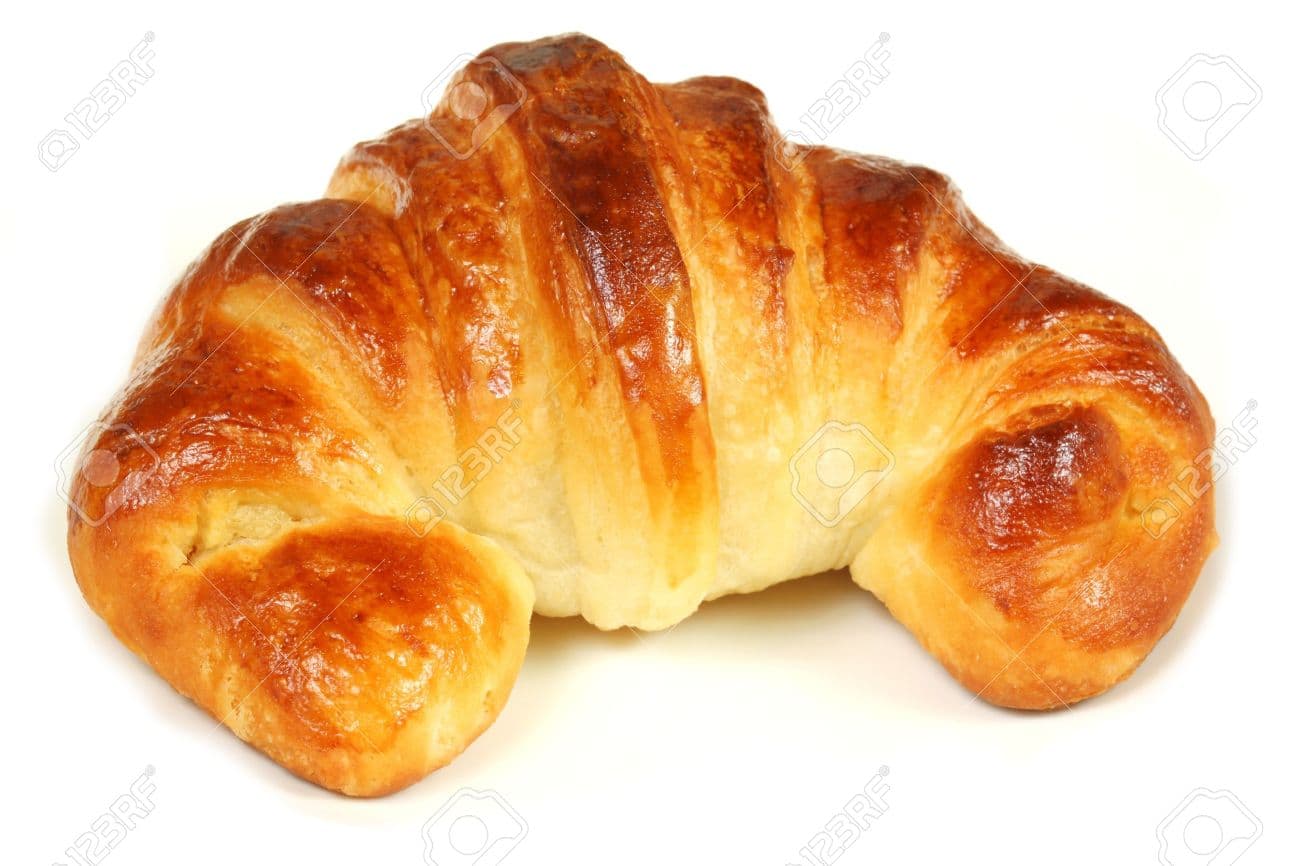
Lamination & Puff Pastry Craft
The mastery of alternating microscopic dough and fat layers without fracture
Lamination incorporates a plastic block of dry butter into a dough packet (détrempe), folded repeatedly into single or double turns. During baking, steam expands from the dough layers, trapped by butter barriers, lifting hundreds of separate delicate leaves like an accordion.
Biochemical & Physical Rationale
Success relies on the melting profile of dry 84% fat butter (34°C-36°C) and temperature matching. If butter is too cold (<12°C), it fractures into brittle shards. If too warm (>18°C), it melts into the dough matrix, destroying physical separation.
Non-Negotiable Rules
- Work with dough and butter at strictly identical plasticity (same indentation feel under finger pressure).
- Enforce mandatory 30-45 minute chill rests at 4°C between turns to relax tensile gluten stress.
- Roll outward from center to edges with consistent pressure without pinching sealed margins.
Pivotal Errors to Avoid
- Using regular 82% grocery butter containing excess unbound water that punctures dough leaves.
- Chaining multiple turns without intermediate chilling: butter liquifies into the dough flour.
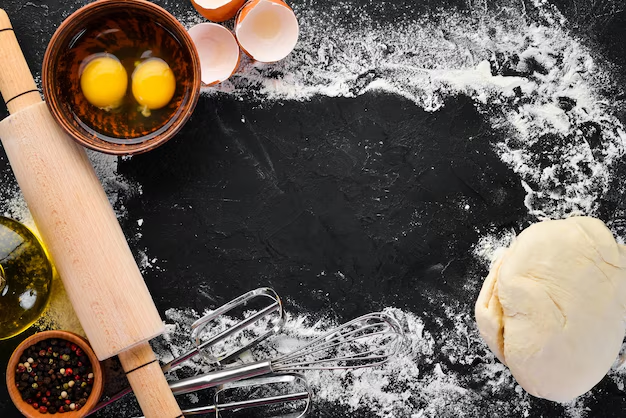
Kneading & The Gluten Matrix
Protein hydration, disulfide bonding and windowpane elasticity development
Kneading hydrates two insoluble wheat proteins—gliadin (extensibility) and glutenin (tenacity)—weaving them into an elastic 3D web: the gluten matrix. This structure forms an impermeable gas-trapping network capable of capturing fermentation carbon dioxide.
Biochemical & Physical Rationale
Initial mixing binds water to proteins and damaged starches. Mechanical shear aligns amino acid chains, forging covalent disulfide bridges. Over-kneading subjects these bridges to excessive shear stress, irreversibly tearing the matrix into a runny mess.
Non-Negotiable Rules
- Incorporate autolyse (30-60 min flour-water soak) to develop 50% of gluten cohesion without mechanical friction.
- Knead primarily on low speed to protect natural carotenoid pigments and retain an ivory cream-colored crumb.
- Halt mechanical action immediately upon reaching a clean, translucent windowpane membrane.
Pivotal Errors to Avoid
- Kneading at high RPM: frictional heat spikes dough past 26°C and bleaches flavor-rich carotenoids through hyper-oxidation.
- Dumping salt in during first seconds of mixing: salt competes with proteins for water, hindering initial hydration.
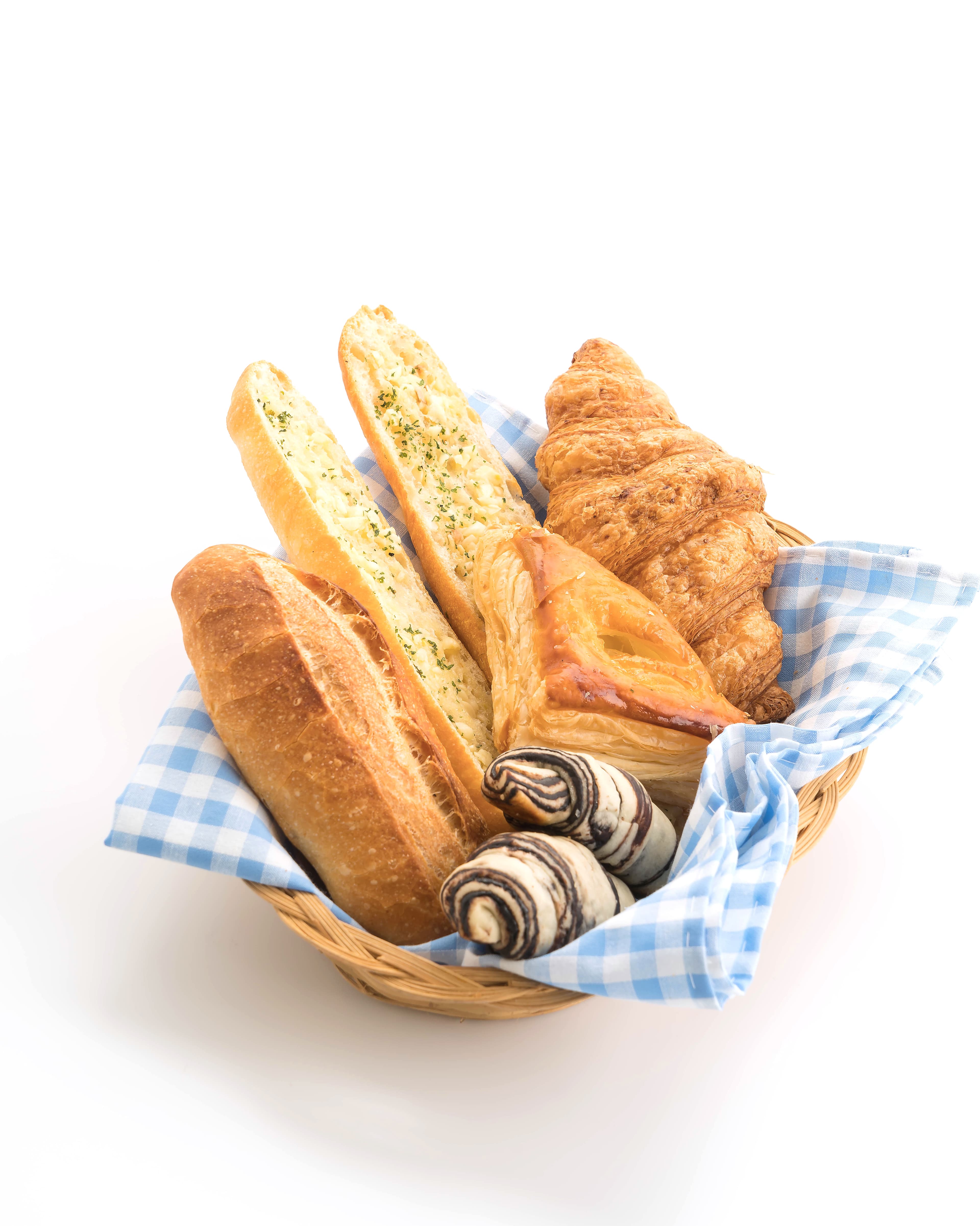
Fermentation & Bulk Proofing
Glycolysis, acidogenesis and aroma formation under strict thermal control
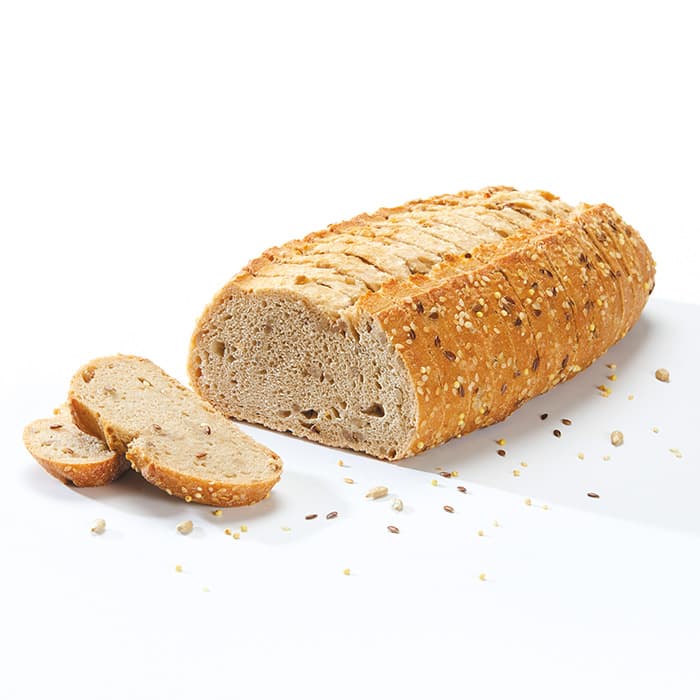
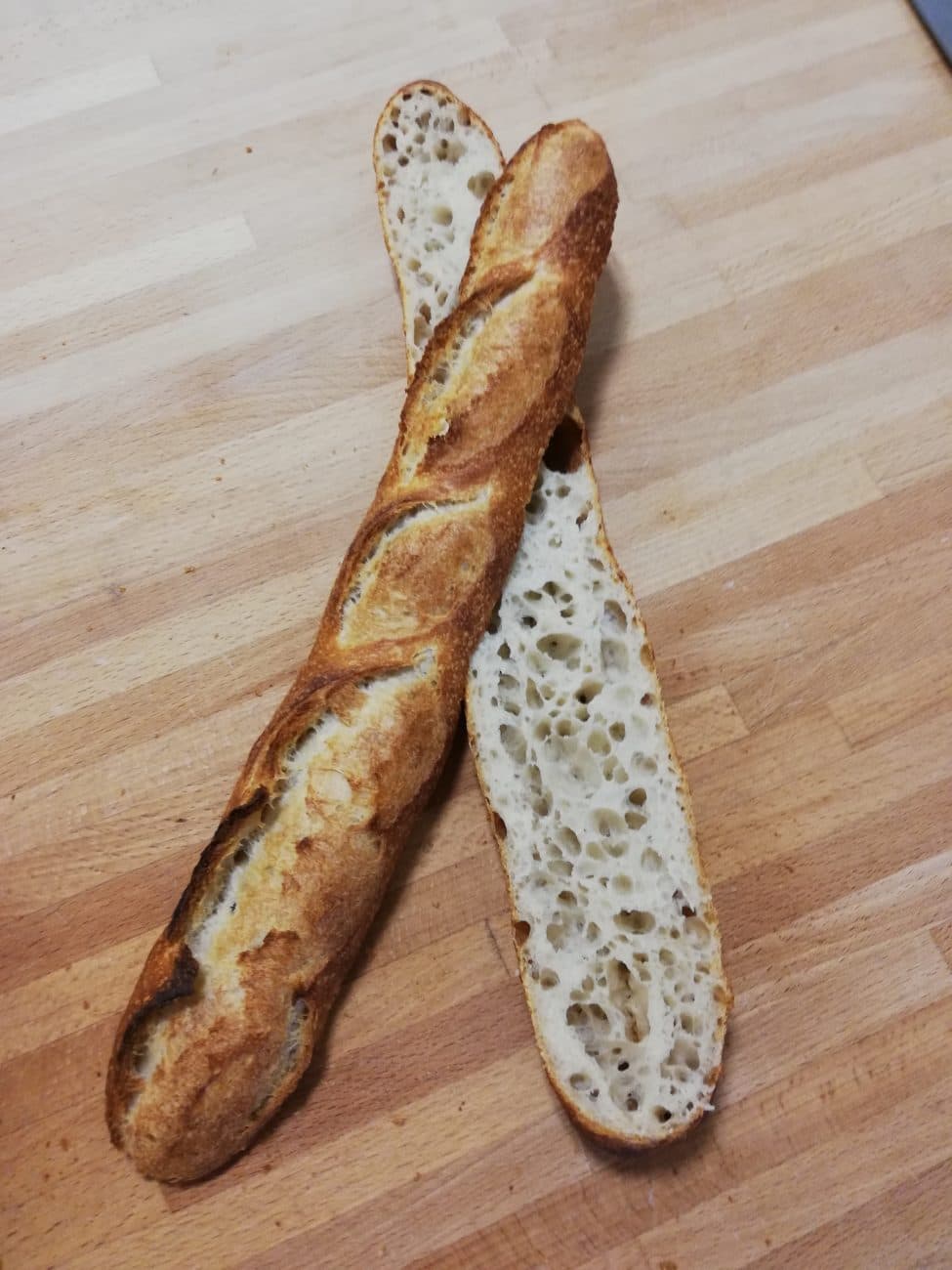
Bulk fermentation (pointage) is the sacred window where 80% of bread's flavor profile is minted. Yeasts convert simple sugars into carbon dioxide and ethanol, while amylase enzymes continuously cleave complex starches into maltose.
Biochemical & Physical Rationale
Cold retardation at 4°C-8°C throttles yeast gas production while allowing native proteases to tenderize gluten and lactic acid bacteria to generate complex aromatic organic acids (lactic and acetic).
Non-Negotiable Rules
- Administer measured stretch-and-folds during early proof to re-oxygenate yeasts and reinforce tension.
- Lock proofing room conditions tightly (18°C-24°C direct, 4°C-6°C cold retarded).
Pivotal Errors to Avoid
- Under-fermenting out of rush: produces flat, dense, flavorless bread with ruptured lateral seams.
- Over-proofing: slack dough collapses flat onto stone due to complete sugar exhaustion.
Wild Sourdough Starter & Maintenance
Living biome of wild yeasts and lactobacilli: balancing homofermentative and heterofermentative flora
A wild starter culture is a spontaneous symbiotic ecosystem of micro-organisms (chiefly Candida humilis, Kazachstania exigua, and Lactobacillus sanfranciscensis). Fed with clean flour and water, regular refreshments maintain an ideal active pH of 3.8 to 4.2.
Biochemical & Physical Rationale
Hydration ratio and holding temperature govern the acid profile: liquid starter (100% hydration) fosters lactic acid (milky yogurt notes), while stiff starter (50% hydration) stimulates acetic acid (bright, fruity vinegar notes).
Non-Negotiable Rules
- Feed with unbleached organic stone-milled flour (T80 wheat, T130 rye) packed with native wild yeasts.
- Incorporate starter right at peak expansion (2.5x - 3x volume) before domed crest recedes.
Pivotal Errors to Avoid
- Using tap water with residual chlorine that kills delicate wild yeasts.
- Abandoning starter in fridge until heavy hooch forms and acid toxicity paralyzes bacteria.
The Base Temperature Rule
The fundamental baker's equation: TB = Flour Temp + Room Temp + Water Temp
In artisanal French baking, precision starts with a thermometer. The Base Temperature (TB) is an empirical constant calculated for each recipe to ensure the finished dough emerges from the mixer at its optimal enzymatic window (typically 23°C to 24°C).
Biochemical & Physical Rationale
Formula: Water Temp = TB - (Room Temp + Flour Temp). If mechanical spiral mixer introduces friction warmth (+3°C to +5°C), this friction coefficient is subtracted from water temperature target.
Non-Negotiable Rules
- Record ambient room temperature and flour sack temperature before weighing water.
- Deploy crushed ice or refrigerated water in summer months to hit sub-10°C water requirements.
Pivotal Errors to Avoid
- Disregarding water temperature: overheated dough races through fermentation, yielding sticky grey crumb.
- Underestimating internal motor friction on household mixers during long high-speed kneading sessions.
Fundamental Creams & Emulsions
Pastry, mousseline, diplomat, bavaroise and ganache: starch gelatinization and fat stabilization
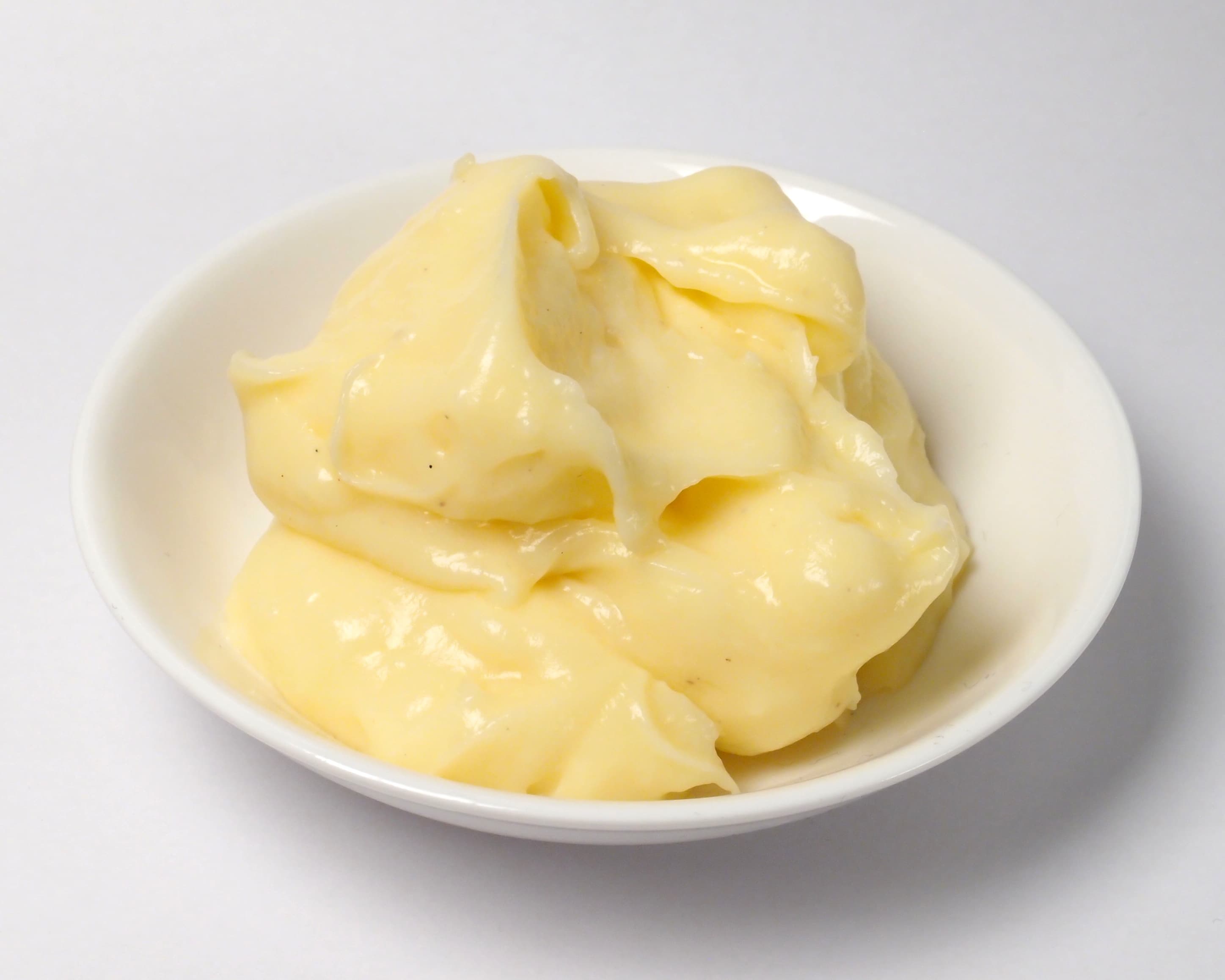
French pastry is structured around a rigorous hierarchy of mother creams. From foundational pastry cream (crème pâtissière) stems mousseline (whipped with softened butter), diplomat (folded with gelatin-set whipped cream), and Chiboust (lightened with warm Italian meringue).
Biochemical & Physical Rationale
Starch gelatinization (cornstarch or wheat starch swelling at 82°C-85°C) binds the dairy emulsion. For mousseline, the water-in-oil emulsion requires strict temperature parity at 20°C to avert phase inversion and curdling.
Non-Negotiable Rules
- Sustain a vigorous rolling boil for 1-2 full minutes to pasteurize cream and denature egg yolk amylase enzymes.
- Blast chill immediately with cling wrap flush against surface (cooling from 60°C to 10°C within 2 hours).
Pivotal Errors to Avoid
- Halting heat at first bubble: cream liquefies in display fridge due to active residual amylase breakdown.
- Folding cold butter into lukewarm cream: instantaneous greasy curdling.
Mirror Glazes & Finishing Techniques
Light refraction, bubble-free immersion blender emulsion and pouring viscosity control
Mirror glazing is the pristine visual hallmark of modern French entremets. Formed from an emulsion of sugar syrup, glucose, bloomed gelatin, condensed milk, and chocolate, it coats frozen mousse cakes in a flawless reflective sheen without gummy buildup.
Biochemical & Physical Rationale
Critical viscosity is ruled by pouring temperature (precisely 30°C-32°C). Contact with a -18°C frozen entremets instantly sets the gelatin mesh into an immaculate 1-millimeter skin.
Non-Negotiable Rules
- Emulsify with immersion blender kept submerged at bottom of jug to never draw in micro-air bubbles.
- Glaze only cakes frozen solid to -18°C core temperature for instant, streak-free adhesion.
Pivotal Errors to Avoid
- Pouring too warm (>35°C): melts outer mousse layer, causing the glaze to slide off the cake base.
- Pouring too cold (<28°C): creates lumpy, gelatinous drag lines that ruin the reflective surface.
Precision Entremets Architecture
Upside-down assembly in silicone molds, texture balance and clean architectural cross-sections
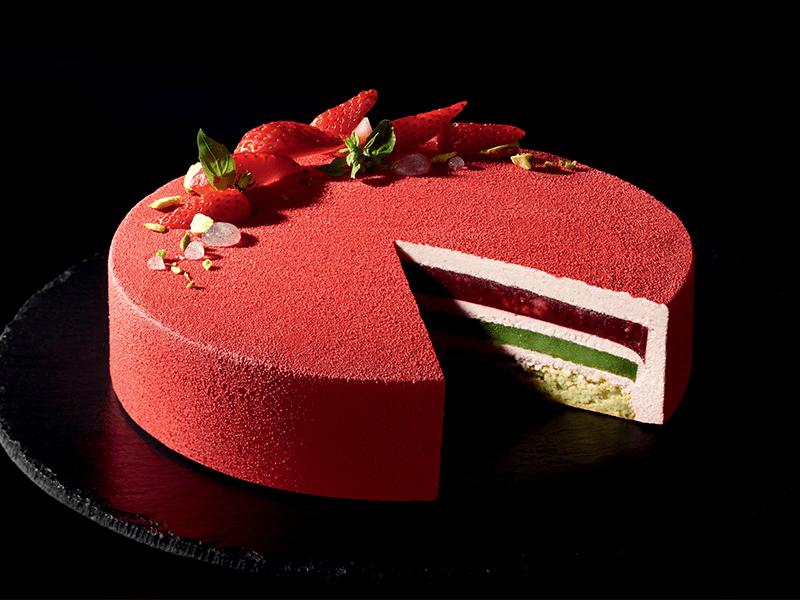
The modern entremets is a five-part architectural composition: a sponge base (financier or dacquoise), a crispy layer (praline feuillantine), an insert (fruit gelée or crémeux), an enveloping light mousse, and a protective outer glaze.
Biochemical & Physical Rationale
Inverted assembly (mousse first, then core insert, crisp layer, and sponge cap) guarantees geometric flatness on the crown upon unmolding from sub-zero blast freezers.
Non-Negotiable Rules
- Scale core inserts 2 cm smaller than outer ring so the insert is perfectly centered and encased in mousse.
- Pipe mousse vigorously to fill mold crevices and eliminate internal air voids.
Pivotal Errors to Avoid
- Slicing with a dry knife: tears sponge and smears cream layers across the slice.
- Thawing at room temperature, which causes condensation to bead on glaze and triggers weeping.