How to Achieve an Ultra-Crispy Crust and Open Honeycomb Crumb
Steam injection, stone deck baking, hydration percentages, and preserving gas cells during shaping
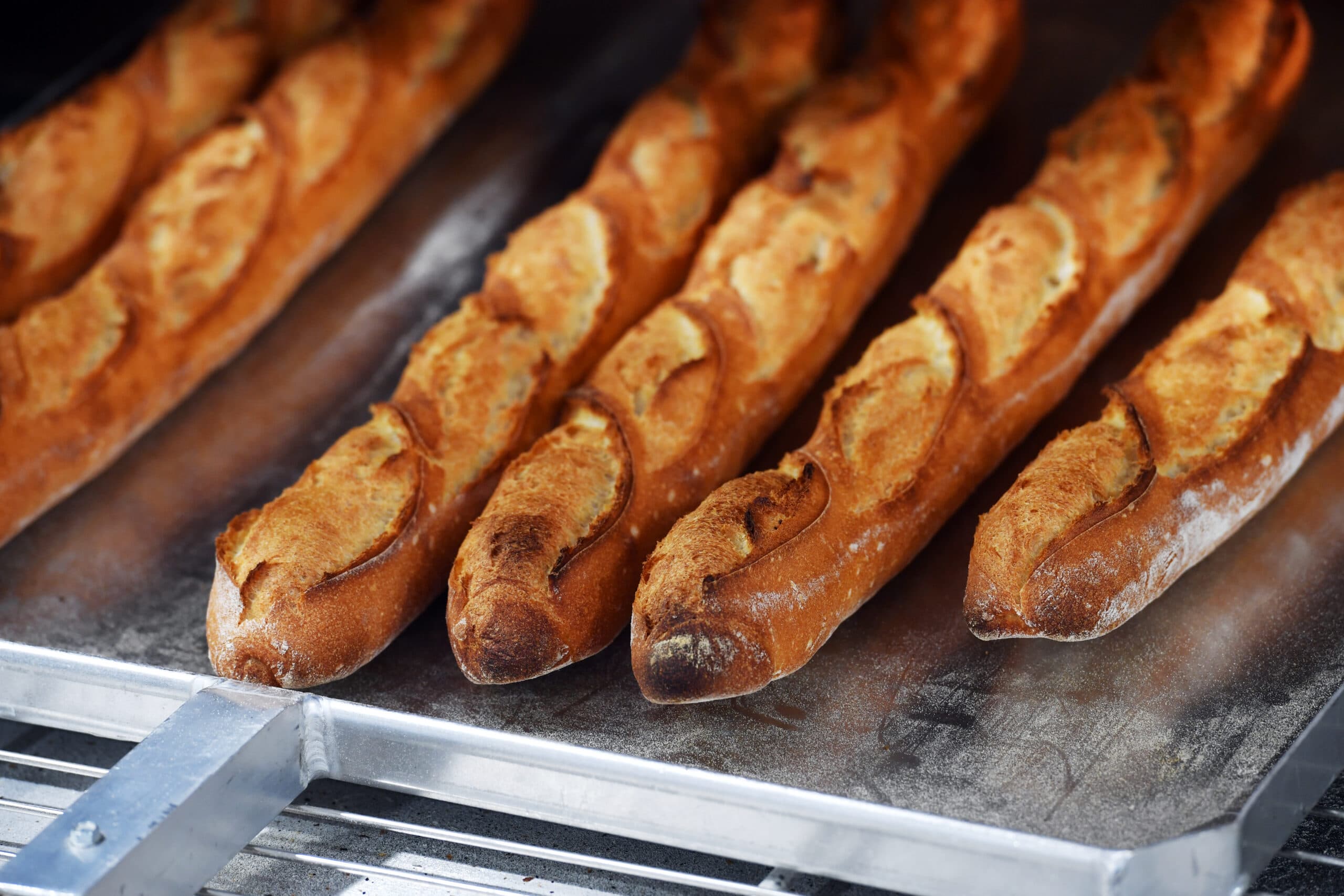
Artisanal French baguette showing blistered crispy crust and open irregular cream crumb
« Is your homemade bread coming out pale, soft or rubbery? Master the 4 physical triggers of professional baker crust and open crumb. »
01.1. The Crucial Role of Oven Steam
Without steam at loading, hot oven air dries the dough surface in seconds. The crust hardens prematurely, strangling oven spring and welding score cuts shut. Steam condenses onto the cool dough skin: it delays crust formation, gelatinizes surface starches into a glassy gloss, and permits explosive vertical rise.
02.2. Handle Fermented Dough Like Blown Glass
Open irregular aerations require gentle handling. Every carbon dioxide pocket forged across hours of bulk fermentation must be preserved. Cut cleanly with a bench knife, never compress, and shape with featherlight tension.
Practical Checklist for Success
Essential steps to implement in your home kitchen or bakehouse
- ✓Preheat your oven and baking stone or Dutch oven for a full 45 minutes at 250°C to saturate thermal mass.
- ✓Vent the oven door slightly for the final 3 minutes of baking to exhaust trapped humidity and toast the crust dry.
Troubleshooting & Common Pitfalls
How to diagnose and correct execution flaws
Baking bread in a dry domestic oven without any steam
Pour 50 ml of boiling water into a preheated cast iron skillet at the bottom of the oven the second bread enters.
Related Recipes
Put these techniques into direct practice with these master formulations