Traditional French Butter Brioche
Tender stringy crumb, 50% AOP butter slowly emulsified and overnight cold retardation
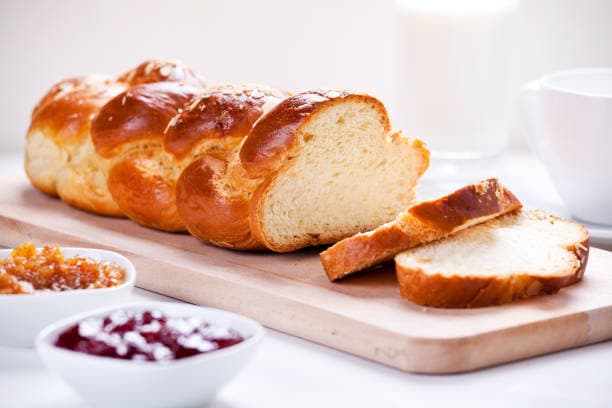
Heritage & Historical Context
The emblem of French baking generosity, Parisian pure butter brioche challenges kneading physics by emulsifying up to 50% cold butter relative to flour weight into a strong gluten sheath. It yields a featherweight, golden, shreddable crumb with intoxicating fresh butter aromatics.
Documented in 16th-century Normandy, France's heartland of dairy, brioche was codified over centuries into the iconic fluted 'brioche à tête' baked in traditional tin molds.
Step-by-Step Laboratory Protocol
4 stepsInitial dough mixing and gluten development
In the mixer bowl, combine flour, salt, sugar, yeast and cold eggs (no water). Knead 10 minutes on medium speed until dough pulls away from bowl sides and forms an elastic translucent windowpane.
Emulsifying cold butter cubes
Add cold diced butter in 4 stages, kneading vigorously between each addition. The gluten structure must fully absorb all fat until the dough shines and pulls clean from the bowl.
Warm bulk proof followed by overnight chill
Proof 1 hour at 22°C. Punch down to degas completely. Wrap airtight and chill 12 hours at 4°C so butter firms up for clean shaping.
Shaping the 'tête' and golden bake
Form body and head by piercing dough and threading the topknot. Place in buttered mold. Glaze lightly. Proof 2 hours at 24°C. Bake 25 minutes at 170°C.
Chef's Technical Rules
- Never use room-temperature soft butter: above 18°C, fat separates into grease and melts the gluten network.
- The secret to shreddable brioche crumb is reaching full windowpane strength before introducing any fat.
Troubleshooting & Solutions
| Symptom | Root Cause | Corrective Action |
|---|---|---|
| Oily, sticky dough refusing to hold shape | Dough warmed past 25°C in mixer, breaking the fat emulsion | Use fridge-cold eggs and freeze dough for 30 minutes to reset butter solids |